Osteopathic assessment
Whole-body evaluation, movement insight, and targeted manual care planning.
Designed for fast scanning on mobile, with a calm clinical tone and a high-tech edge.
Osteopathic assessment + data-informed diagnostics + photobiomodulation (PBM) laser therapy.
Clear assessment, targeted care, and ongoing support—so you always know the plan and the next step.
Whole-body evaluation, movement insight, and targeted manual care planning.
Clear narratives supported by structured clinical reasoning and measurement.
High-tech, gentle photobiomodulation sessions designed for comfort.
A roadmap that’s simple to follow—designed around your daily life.
Diagnosis first, treatment second, recovery always the goal.
At Winer Clinics, osteopathic treatment begins with one essential principle: no treatment is carried out without a clear, structured diagnosis.
Osteopathy is not simply hands-on therapy. It is a diagnostic medical discipline that seeks to understand why a problem exists before deciding how to treat it.
Before any treatment is started, we will carry out a thorough osteopathic assessment, which may include:
Pain is often not coming from where you feel it. An accurate diagnosis allows us to identify the true source of dysfunction rather than simply treating symptoms. This diagnostic process is what makes osteopathy both safe and effective.
Osteopathy is based on the understanding that the body functions as one integrated system. A problem in one area can place strain on another. For example:
By assessing the entire body, osteopathic diagnosis helps uncover these relationships and ensures treatment is logical, targeted, and appropriate.
Once a diagnosis has been established, treatment may include a combination of:
Treatment is individualised, adjusted to your age, condition, comfort, and clinical findings.
Without diagnosis:
At Winer Clinics, treatment decisions are based on clinical reasoning, not routines. Every technique used must have a clear purpose linked to your diagnosis.
Technologies such as Photobiomodulation (PBM) can be extremely effective — when used correctly.
At Winer Clinics, adjunct therapies:
PBM works best when guided by a strong osteopathic diagnosis — for example, targeting a specific inflamed structure, irritated nerve, or healing tissue identified during assessment. Technology enhances care, but diagnosis directs it.
Osteopathy is suitable for a wide range of patients, including those with:
We will always advise whether osteopathic treatment is appropriate for you, and if not, try to point you in the right direction. Following many years of practice we have a reliable and varied list of leading specialists and consultants we refer to.
We believe effective treatment starts with understanding the problem — and that understanding comes from careful examination, clinical experience, and respect for the complexity of the human body.
If you are experiencing pain, stiffness, or reduced function, an osteopathic assessment can help clarify what is happening and guide the most appropriate treatment plan for you.
Clarity before care.
At Winer Clinics, accurate diagnosis is the foundation of everything we do. Before treatment begins, we focus on understanding what is really happening, why it is happening, and how best to address it.
Symptoms alone rarely tell the full story. Clear, structured diagnostics allow treatment to be precise, safe, and effective.
Treating without clarity risks:
Our diagnostic approach ensures that any treatment — whether osteopathic care, rehabilitation, or adjunct therapies such as PBM — is guided by evidence, not guesswork.
Winer Clinics offers a range of in-house diagnostic assessments, allowing faster answers and more integrated care. Depending on your presentation, this may include:
These tests can help identify contributors such as inflammation, nutritional imbalance, digestive dysfunction, or systemic stress that may be influencing your symptoms.
Where appropriate, patients may be referred for in-house diagnostic ultrasound.
Ultrasound is particularly useful for assessing:
Ultrasound allows real-time visualisation, helping confirm or refine a diagnosis and guide appropriate treatment decisions.
When further investigation is required, we can arrange or refer you locally for:
These investigations may be used to:
We work closely with trusted local imaging and laboratory providers to ensure continuity and clarity of care.
For example, technologies such as Photobiomodulation (PBM) are most effective when directed at a clearly identified tissue, process, or diagnosis — whether that is inflammation, nerve irritation, or delayed tissue healing. Strong diagnosis leads to targeted therapy and better outcomes.
Findings are always interpreted in the context of:
This whole-person approach allows us to connect musculoskeletal findings with metabolic, inflammatory, or digestive factors when relevant.
Not every patient needs imaging or testing. We will explain:
Our aim is clarity, not excessive investigation.
By combining clinical expertise with modern diagnostic tools, we ensure that treatment is grounded in knowledge — not assumptions. Winer Clinics — diagnosis-led care, integrated medicine, informed recovery.
At Winer Clinics, we use Photobiomodulation (PBM) as part of a modern, evidence-based approach to pain relief, tissue healing, and functional recovery.
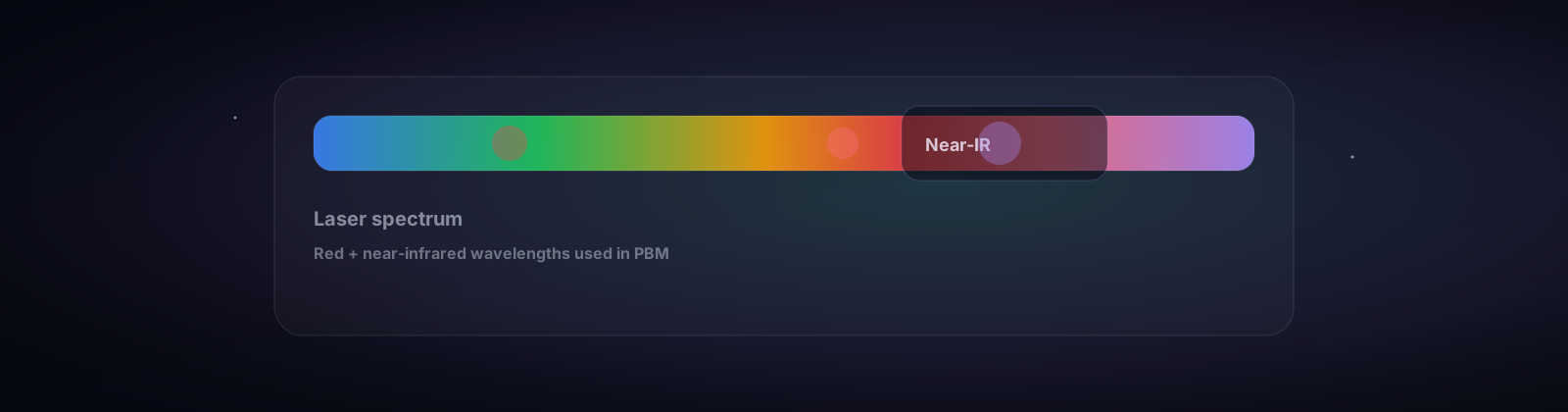
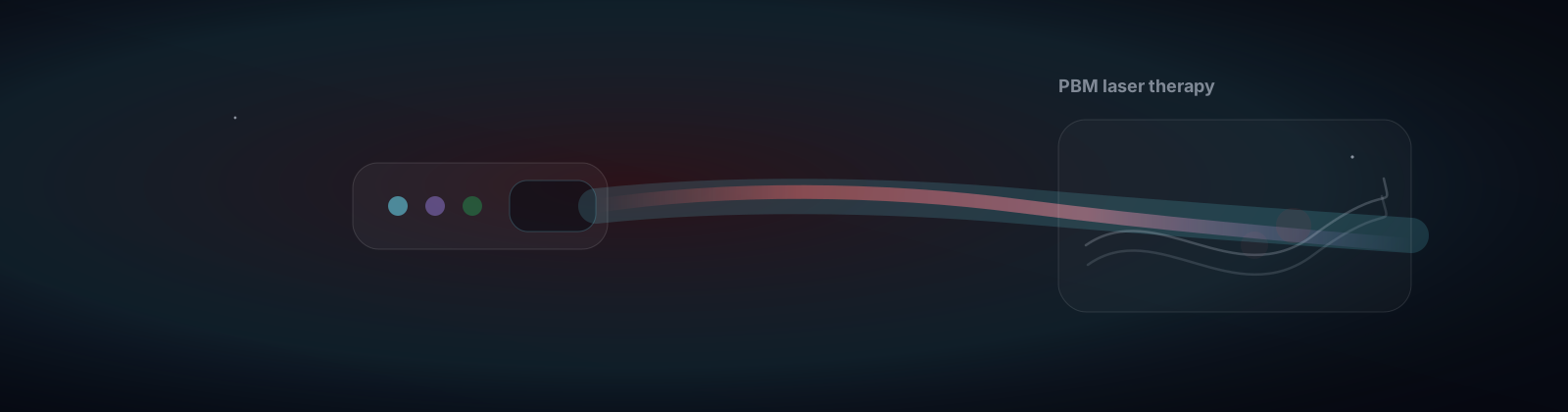
PBM is a non-invasive light therapy that uses specific wavelengths of red and near-infrared light to stimulate your body’s own repair and recovery processes. It is sometimes referred to as low-level laser therapy or medical light therapy, but unlike surgical lasers, PBM does not cut, burn, or damage tissue.
Your cells contain tiny energy centres called mitochondria. PBM light is absorbed by these mitochondria, helping them work more efficiently.
In simple terms, PBM helps your cells do their job better.
PBM is used widely in clinical and rehabilitation settings and is supported by a growing body of medical research. At Winer Clinics, PBM is commonly used to support patients with:
PBM is often combined with osteopathic treatment, rehabilitation exercises, and lifestyle advice to achieve the best possible outcomes.
Most patients feel nothing at all, or a gentle warmth during treatment. There is no pain, no needles, and no recovery time.
A typical session lasts between 5–20 minutes, depending on the area treated and the condition being addressed. You can return to normal activities immediately after treatment.
Yes. PBM has an excellent safety profile when delivered correctly by trained clinicians using medical-grade equipment.
PBM does not use ionising radiation and does not carry the risks associated with medications or injections.
This varies depending on:
Some patients notice improvement after just a few sessions, while chronic or complex conditions may require a structured course of treatment. Your clinician will discuss a personalised plan with you.
Winer Clinics is known for combining clinical experience, scientific evidence, and advanced technology. Our approach to PBM is evidence-led (not trend-led), integrated with hands-on clinical care, and tailored to the individual.
“Everything felt structured and calm. The plan was easy to follow.”
“High-tech without being cold—clear explanations, gentle sessions.”
“The environment itself made me feel confident before treatment started.”
Julian M. Winer BSc(OST) DO is a third-generation osteopath with over 33 years of unmatched experience in the clinical application of Low Level Laser Therapy and Photobiomodulation (PBM). Based in the heart of London's prestigious Harley Street medical district, he combines advanced osteopathic diagnosis with cutting-edge laser therapy to treat the full spectrum of musculoskeletal conditions.
Julian has worked at the highest levels of elite sport, including Formula One, MotoGP, the 24 Hours of Le Mans, American Le Mans Series, and Premier League, treating drivers, riders, footballers, and Olympians at the pinnacle of performance.
Alongside his elite sports work, he runs a busy general practice, delivering highly specialised, results-driven care to patients with complex musculoskeletal and soft tissue conditions.
Comfort-first sessions with clear pacing and guidance.